
If you’ve spotted “WFH” in a Slack message, a job listing, or a friend’s Instagram caption, you’re not alone in wondering what it actually means. This short abbreviation has become one of the most common terms in modern work culture, and understanding it properly can help you communicate more clearly at work and online.
In this guide, you’ll learn exactly what WFH stands for, how it’s used in texting, emails, and job postings, and how it compares to remote and hybrid work. We’ll also cover real examples, benefits, challenges, and answers to the most common questions people ask about WFH.
What Does WFH Mean?
WFH means “work from home” or “working from home.” It describes a situation where someone performs their job duties from their house or residence instead of commuting to a physical office.
The term is used as both a noun and a verb. Someone might say “I have a WFH day” or simply “I’m WFH-ing today.” Either way, the core idea stays the same: the person is doing their job outside a traditional office setting, usually from home.
What Does WFH Stand For?
WFH stands for:
- W – Work
- F – From
- H – Home
It’s a simple initialism, meaning each letter represents the first letter of a word in the phrase. Unlike some abbreviations that have multiple unrelated expansions, WFH almost always stands for “work from home” in everyday and workplace communication.
What Does WFH Mean in Texting and Chat?
In texting and chat apps, WFH is used as a quick way to tell someone your work location for the day. For example, a coworker might text, “WFH today, ping me on Slack instead of stopping by my desk.”
In casual chat, WFH often appears alongside other shorthand like “BRB” (be right back) or “OOO” (out of office). It’s typically lowercase or uppercase depending on personal texting style, and it doesn’t need punctuation or explanation among people familiar with workplace slang.
Why Do People Use WFH Instead of Writing It Out?
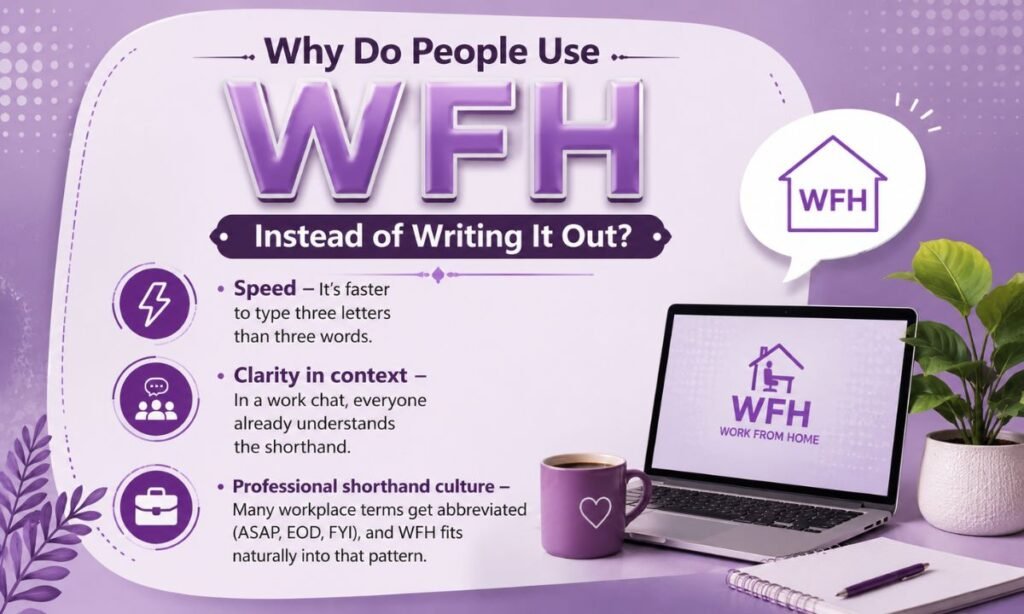
People default to WFH instead of typing “working from home” for a few practical reasons:
- Speed – It’s faster to type three letters than three words.
- Clarity in context – In a work chat, everyone already understands the shorthand.
- Professional shorthand culture – Many workplace terms get abbreviated (ASAP, EOD, FYI), and WFH fits naturally into that pattern.
- Status updates – It works well in calendar blocks, Slack statuses, and email signatures where space is limited.
Essentially, WFH saves time without sacrificing meaning, as long as the audience already knows the term.
Where Is WFH Commonly Used?
WFH shows up across several types of communication, each with a slightly different tone.
Workplace Chats and Team Messages
In tools like Slack, Microsoft Teams, or Google Chat, WFH is used to quickly notify teammates about someone’s work location. Example: “Heads up, I’ll be WFH tomorrow.”
Emails and Professional Communication
In emails, WFH is used more formally, often to confirm schedules or set expectations. Example: “I’ll be WFH on Thursday and available via email throughout the day.”
Social Media and Casual Conversations
On platforms like Instagram or X (formerly Twitter), WFH is often used casually or humorously, such as captioning a photo of a home desk setup with “WFH vibes” or “another WFH Monday.”
What Does WFH Mean in a Work Context?
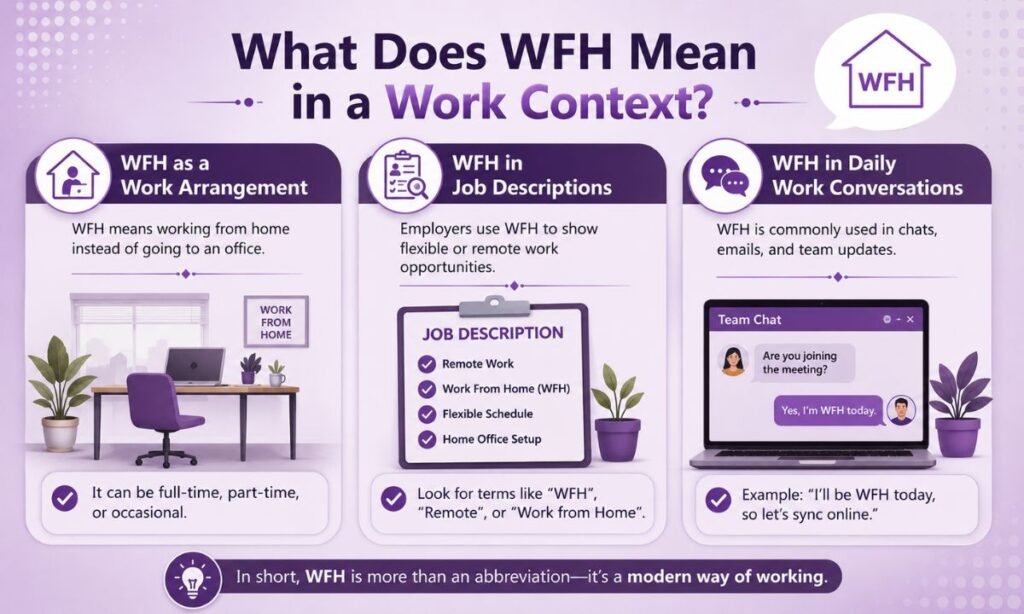
WFH as a Work Arrangement
In a professional setting, WFH refers to an official or informal arrangement where an employee performs their duties from home instead of an office. This can be a permanent setup, a few days a week, or an occasional exception.
WFH in Job Descriptions
Employers use WFH in job postings to indicate that a role can be performed from home, either fully or partially. It signals flexibility, but the exact terms (schedule, location restrictions, equipment provided) usually need to be confirmed separately.
WFH in Daily Work Conversations
Day-to-day, WFH is used casually between coworkers to explain availability or location, such as “I’m WFH so I might be a bit slower on Zoom calls.”
Is WFH the Same as Working From Home?
Yes. WFH is simply the abbreviated form of “working from home.” There is no difference in meaning; it’s purely a matter of formality and writing style. “Working from home” is more suitable for formal writing, while WFH fits casual and semi-formal communication like chats, emails, and job posts.
What Does WFH Mean in a Job Posting?
In a job posting, WFH usually indicates that the role can be performed from home rather than requiring in-office attendance. However, it doesn’t automatically mean the job is fully remote or open to any location.
Job seekers should check for additional details such as:
- Whether the role is full-time WFH or hybrid
- Time zone or location requirements
- Whether equipment or internet stipends are provided
- Any occasional in-office requirements
When Do People Use WFH in Everyday Conversations?
Telling Someone You Are Working From Home
The most common use is a simple heads-up, like “WFH today, call my cell if needed.”
Discussing a Remote Work Schedule
People also use WFH when explaining a recurring pattern, such as “I’m WFH Mondays and Fridays, in-office the rest of the week.”
Talking About Work Availability
WFH is often paired with availability notes, like “WFH but fully available on email and Slack.”
Real-Life Examples of WFH in Text Conversations
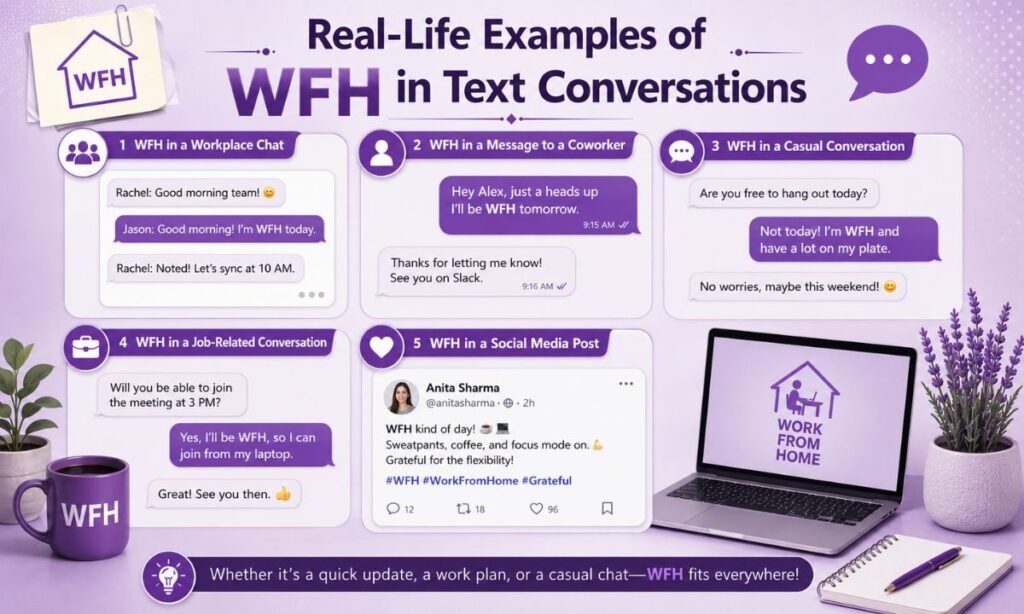
WFH in a Workplace Chat
“Just a heads-up, I’m WFH tomorrow. I’ll join the 10 a.m. meeting via video call.”
WFH in a Message to a Coworker
“Can we push our sync to the afternoon? I’m WFH and dealing with a delivery this morning.”
WFH in a Casual Conversation
“WFH again today, might actually get some laundry done between meetings.”
WFH in a Job-Related Conversation
“The recruiter confirmed it’s a WFH role with occasional visits to the regional office.”
WFH in a Social Media Post
“Coffee, laptop, comfy socks. WFH days hit different.”
When Should You Use WFH?
In Work and Casual Messages
WFH works well in Slack messages, texts, casual emails, and social posts where a quick, informal tone is appropriate.
When the Reader Understands the Abbreviation
Use WFH when you’re confident your audience already knows what it means, such as coworkers, recruiters, or friends familiar with workplace terms.
When Should You Avoid Using WFH?
In Formal Documents
Avoid WFH in contracts, official HR policies, or formal reports. Use the full phrase “working from home” instead for clarity and professionalism.
When the Meaning May Not Be Clear
If you’re writing to someone unfamiliar with workplace slang, such as an international audience or a non-native English speaker, it’s safer to spell it out at least once.
Also Read Meaning OOO Mean in Text
WFH vs Remote Work vs Hybrid Work
These three terms are related but not identical. Here’s how they differ:
| Term | Meaning | Location Flexibility |
| WFH | Working specifically from your own home | Fixed to home |
| Remote Work | Working away from a central office | Home, coworking space, or anywhere approved |
| Hybrid Work | Splitting time between home and office | Partial office attendance required |
In short, WFH is the most location-specific of the three, remote work is broader, and hybrid work blends both models.
What Are the Benefits of WFH?
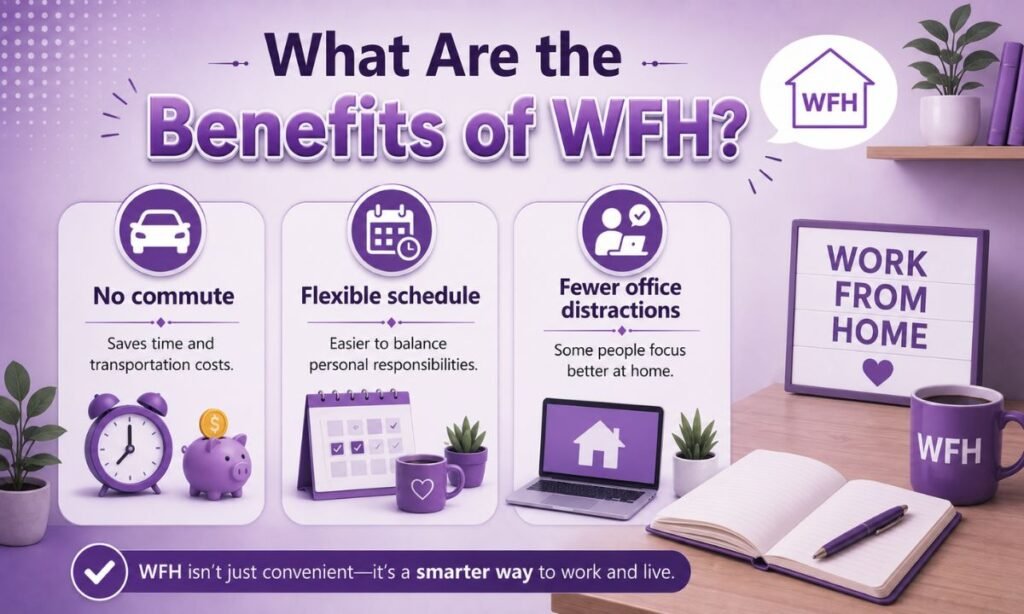
- No commute – Saves time and transportation costs.
- Flexible schedule – Easier to balance personal responsibilities.
- Fewer office distractions – Some people focus better at home.
- Cost savings – Reduced spending on transport, meals, and work clothing.
- Better work-life balance – More time for family, hobbies, and rest.
What Are the Challenges of WFH?
- Isolation – Less face-to-face interaction with colleagues.
- Distractions at home – Family, chores, or noise can disrupt focus.
- Blurred boundaries – Work and personal life can overlap more easily.
- Communication gaps – Some information flows less naturally without in-person contact.
- Setup costs – Employees may need to invest in a proper home office.
What Are the Best Alternatives to WFH?
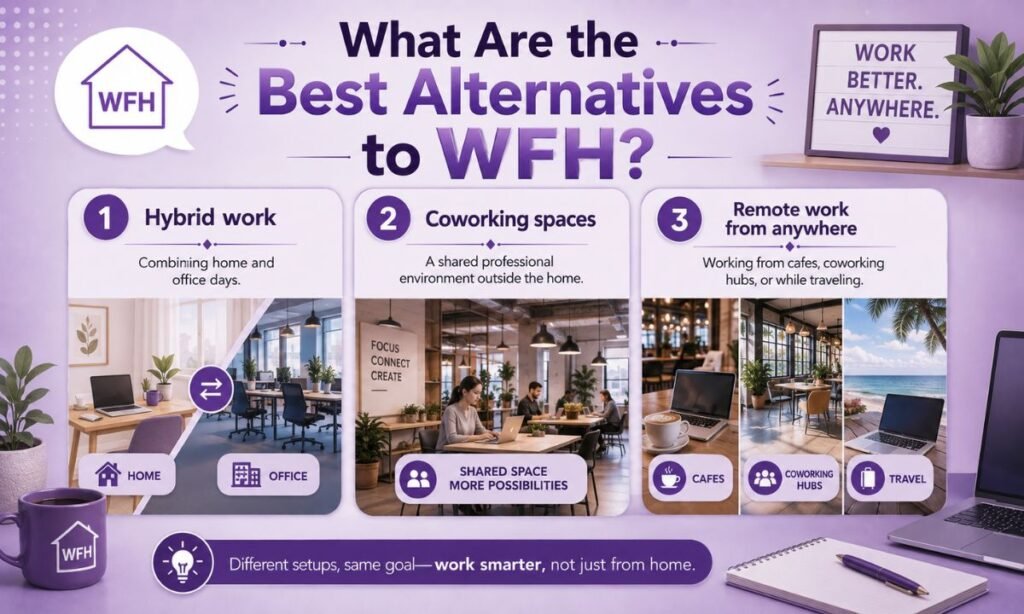
For those who don’t want full-time WFH, a few alternatives are worth considering:
- Hybrid work – Combining home and office days.
- Coworking spaces – A shared professional environment outside the home.
- Remote work from anywhere – Working from cafes, coworking hubs, or while traveling.
- Flexible office hours – Staying in-office but with adjustable timing.
Can WFH Have Other Meanings?
While “work from home” is by far the most common meaning, WFH can occasionally stand for something else depending on context, such as certain organization names or location codes used in specialized fields. In everyday and workplace communication, though, WFH almost always refers to working from home.
Also Read Meaning AMOS Mean
Frequently Asked Questions About WFH Meaning
What does WFH stand for?
WFH stands for “work from home” or “working from home.”
What does WFH mean in texting?
In texting, WFH tells someone that you’re working from your house instead of an office that day.
What does WFH mean in a job?
In a job context, WFH means the role allows or requires performing work duties from home.
Is WFH the same as working from home?
Yes, WFH is simply the shortened form of “working from home,” with no difference in meaning.
What does WFH mean in a job posting?
It means the position can be done from home, though specific schedule and location rules may still apply.
Is WFH the same as remote work?
Not exactly. WFH refers specifically to working from home, while remote work can include other locations too.
What is the difference between WFH and hybrid work?
WFH means working entirely from home, while hybrid work combines home and office days.
Can WFH be used in professional emails?
Yes, WFH is acceptable in professional emails, especially for quick schedule updates, but formal documents should use the full phrase.
Is WFH commonly used in text messages?
Yes, it’s one of the most common workplace abbreviations used in texts and chat apps today.
Can WFH have other meanings?
Rarely, but in specific contexts it may refer to something unrelated to work; in everyday use, it almost always means “work from home.”
Final Thoughts About WFH Meaning
WFH has become a permanent part of modern work vocabulary, reflecting how flexible and home-based work has grown over the past few years. Whether you see it in a text, an email, or a job listing, it almost always points to one simple idea: working from the comfort of your own home. Understanding when and how to use it appropriately can help you communicate more clearly, both at work and in casual conversations.

1 thought on “What Does WFH Mean? Meaning, Full Form & Examples (2026)”