
If you’ve been scrolling through texts, DMs, or group chats and spotted the letters “WDYM,” you’re not alone in wondering what it means. This little abbreviation shows up everywhere in casual digital conversation, and understanding it will help you keep up with modern texting culture.
🧠 What Does WDYM Mean in Text?
WDYM stands for “What Do You Mean?” It’s a quick way to ask someone to clarify, explain, or elaborate on something they just said. Instead of typing out the full question, people shorten it to four letters to save time and keep the conversation moving fast — which is exactly the point of most texting slang.
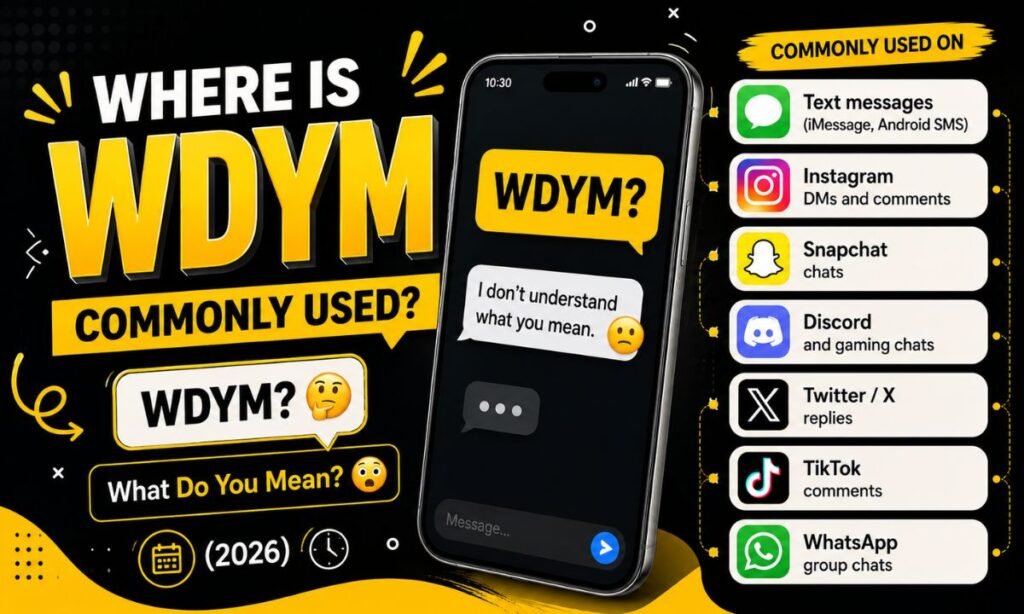
📱 Where Is WDYM Commonly Used?
WDYM pops up across almost every messaging platform and social app, including:
- Text messages (iMessage, Android SMS)
- Instagram DMs and comments
- Snapchat chats
- Discord and gaming chats
- Twitter/X replies
- TikTok comments
- WhatsApp group chats
Tone & Style
The tone of WDYM can shift depending on context. It can sound genuinely curious, mildly confused, playfully teasing, or even a little defensive — all depending on punctuation, capitalization, and the conversation it’s dropped into. “wdym??” reads very differently than “WDYM.”
💬 Examples of WDYM in Conversation
- “I can’t come tonight.” — “wdym, you literally said yes earlier”
- “That movie was actually kind of mid.” — “wdym it was amazing”
- “I think we should cancel the trip.” — “WDYM? What happened?”
Also Read Meaning In Text HBU Meaning In Conversation
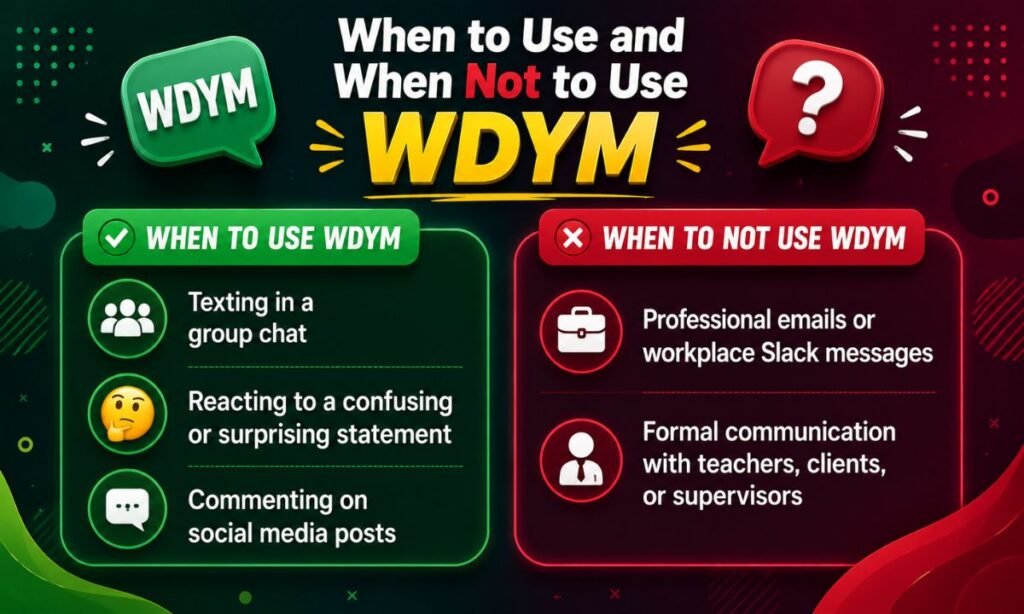
🕓 When to Use and When Not to Use WDYM
✅ When to Use WDYM
- Chatting casually with friends or family
- Texting in a group chat
- Reacting to a confusing or surprising statement
- Commenting on social media posts
❌ When Not to Use WDYM
- Professional emails or workplace Slack messages
- Formal communication with teachers, clients, or supervisors
- Situations where clarity and full sentences matter (contracts, instructions, customer service)
🔎 Other Meanings of WDYM
While “What Do You Mean” is by far the most common meaning, context matters. In rare cases, people invent alternate uses within niche group chats, but these aren’t standard or widely recognized.
Context Comparison Table
| Context | Likely Meaning | Tone |
| Friend group chat | What do you mean? | Casual, curious |
| Debate/argument | What do you mean by that? | Defensive or challenging |
| Social media comment | Confused or disagreeing | Playful or blunt |
| Gaming chat | Quick clarification | Fast-paced, informal |
🔄 Similar Slang Words or Alternatives
- WYM — “What You Mean” (a shorter variant of WDYM)
- IDK — “I Don’t Know”
- TBH — “To Be Honest”
- NGL — “Not Gonna Lie”
- HUH? — a more blunt way to ask for clarification
🤔 Is WDYM Rude?
WDYM isn’t inherently rude — it’s neutral by default. But tone depends heavily on context, capitalization, and punctuation. “wdym :)” feels friendly, while “WDYM???” can come across as annoyed or confrontational. Reading the surrounding conversation is the best way to judge intent.
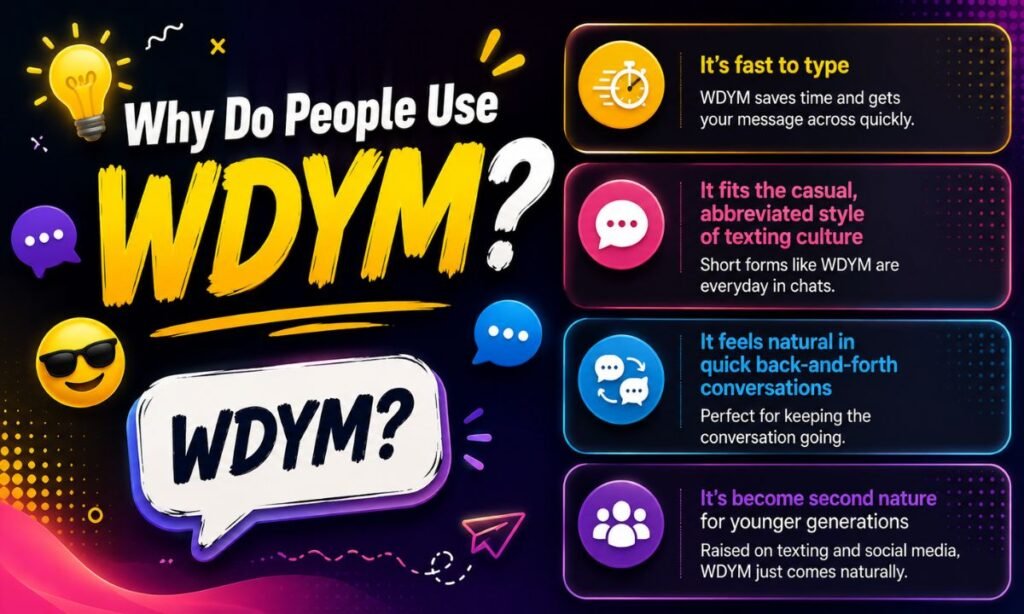
💡 Why Do People Use WDYM?
- It’s fast to type
- It fits the casual, abbreviated style of texting culture
- It feels natural in quick back-and-forth conversations
- It’s become second nature for younger generations raised on texting and social media
🗣️ How to Reply to WDYM
If someone sends you WDYM, they’re asking for clarification. The best response is to explain your point more clearly and calmly, without assuming a hostile tone unless the rest of the conversation suggests one.
Real-Life Conversation Examples
Example 1
- A: “I’m not really feeling the party tonight.”
- B: “wdym, you were so hyped earlier”
- A: “I know, I’m just tired now.”
Example 2
- A: “This restaurant is overrated.”
- B: “WDYM it’s literally the best in town”
- A: “I just didn’t love the service, that’s all.”
Example 3
- A: “We might need to push the deadline.”
- B: “wdym? did something come up?”
- A: “Yeah, the client asked for changes.”
English Has Changed A Lot Recently
Texting and social media have reshaped everyday English, packing full questions and phrases into just a few letters. Abbreviations like WDYM, TBH, and NGL didn’t exist in mainstream vocabulary a couple of decades ago, but they now feel completely normal to anyone active online.
How To Remember And Recognize Shortcuts
The easiest way to remember an abbreviation like WDYM is to sound out the first letter of each word in the phrase it represents: What Do You Mean. Most texting slang follows this same first-letter pattern, which makes new ones easier to decode once you know the trick.
Shortcuts… A Good Idea?
Shortcuts like WDYM are great for speed and casual tone, but they can create confusion if used with someone unfamiliar with internet slang, or in settings where clarity matters more than brevity. Knowing your audience is key.
How To Remember And Recognize Shortcuts
Keep a mental (or literal) list of common ones you encounter, and pay attention to context clues most slang terms make sense once you see how they’re used in a full sentence.
Can WDYM Sound Offensive?
It can, depending on delivery. Multiple question marks, all caps, or a blunt one-word reply of “WDYM” in response to something sincere can come across as dismissive or confrontational. Adding softer language or emojis around it usually keeps the tone friendly.
Common Situations Where People Use WDYM
- Reacting to surprising news
- Questioning a friend’s opinion
- Asking for clarification in a debate
- Responding to a confusing text
- Commenting on a social media post you disagree with
Similar Internet Slang
- IYKYK — “If You Know You Know”
- FR — “For Real”
- LOL — “Laugh Out Loud”
- SMH — “Shaking My Head”
- BRB — “Be Right Back”
Common Mistakes People Make
Thinking WDYM Is Negative
Many assume WDYM always signals annoyance or disagreement, but it’s often just genuine curiosity. Context, not the abbreviation itself, determines tone.
Using It in Professional Emails
WDYM is far too casual for workplace or academic communication. Stick to the full phrase, “What do you mean?” or “Could you clarify that?” in professional settings.
Assuming It Has Multiple Meanings
Some people search for alternate meanings of WDYM, but in nearly all everyday contexts, it means exactly one thing: “What do you mean?”
FAQs About What Does WDYM Meaning in Text
What does WDYM mean in texting?
WDYM means “What Do You Mean?” It’s used to ask someone to clarify or explain what they just said.
Is WDYM the same as WYM?
They’re very close. WYM (“What You Mean”) is a shorter, slightly more casual variant of WDYM, but both are used interchangeably in most conversations.
Is WDYM formal or informal?
WDYM is strictly informal. It belongs in casual texting, social media, and chat conversations, not formal writing.
Is WDYM commonly used on Snapchat and Instagram?
Yes, it’s extremely common on both platforms, especially in DMs and comment sections.
Can WDYM sound rude?
Yes, depending on punctuation, capitalization, and context. Multiple question marks or all-caps versions can come across as blunt or annoyed.
Should I use WDYM in professional communication?
No. It’s best reserved for casual conversations with friends, family, or peers online.
Can adults use WDYM?
Absolutely it’s used across age groups, though it’s especially popular among younger, digitally native users.
Should I use WDYM at work?
It’s best avoided in workplace communication, especially in emails or with clients and supervisors.
Is WDYM popular on social media?
Yes, it’s one of the most commonly used clarification abbreviations across platforms like Instagram, TikTok, and Twitter/X.
How to Reply When Someone Says WDYM?
Simply explain your point more clearly. For example, if someone says “wdym you’re not coming?” you might reply, “I meant I can’t make it tonight because something came up.”
Example
- A: “I don’t think this plan will work.”
- B: “wdym?”
- A: “I just think we need more time to prepare.”
📝 Final Thoughts
WDYM is a simple, widely used piece of texting slang that means “What do you mean?” It’s a natural part of casual digital conversation across texting apps and social media, helping people ask for clarification quickly without slowing down the flow of a chat. While it’s not appropriate for formal or professional settings, it’s a completely normal — and usually harmless — part of how people communicate online today.
