
You open a message, and it ends with three letters: “DTB.” No explanation. Just a short acronym sitting at the end of the text.
If that has happened to you, you’re not alone. Texting slang changes quickly, and DTB is one of those abbreviations that looks simple but depends heavily on context.
This guide explains what DTB means in texting, where people use it, how to read the tone, and when to avoid it. By the end, you’ll know exactly how to respond.
🧠 What Does DTB Mean in Text?
DTB most commonly means “Don’t Text Back.”
People add it to the end of a message to say, “You don’t need to reply to this.” It works as a polite stop sign for the conversation.
Here is the idea in plain terms:
- The sender has said what they needed to say.
- They don’t want or expect a response.
- The conversation is, for now, finished.
Example: “Heading to bed, see you tomorrow. DTB.”
That message says goodnight and also tells you not to wake the phone back up with a reply.
⚠️ Another Meaning (Less Common)
In casual chats, especially among friends, DTB can also mean “Down to Bounce.” This means someone is ready to leave a place or move on to something else.
Example: “This party’s dead. Anyone DTB?”
The two meanings are easy to tell apart. If the message is a closing statement, it means “Don’t Text Back.” If it’s a question about plans, it likely means “Down to Bounce.”
You may also see people guess “Down to Business” or other expansions. These are rare in real texting, so treat them as a last resort.
🧾 In short:
| Abbreviation | Meaning | How common |
| DTB | Don’t Text Back | Most common |
| DTB | Down to Bounce | Less common |
| DTB | Other (context-based) | Rare |
📱 Where Is DTB Commonly Used?
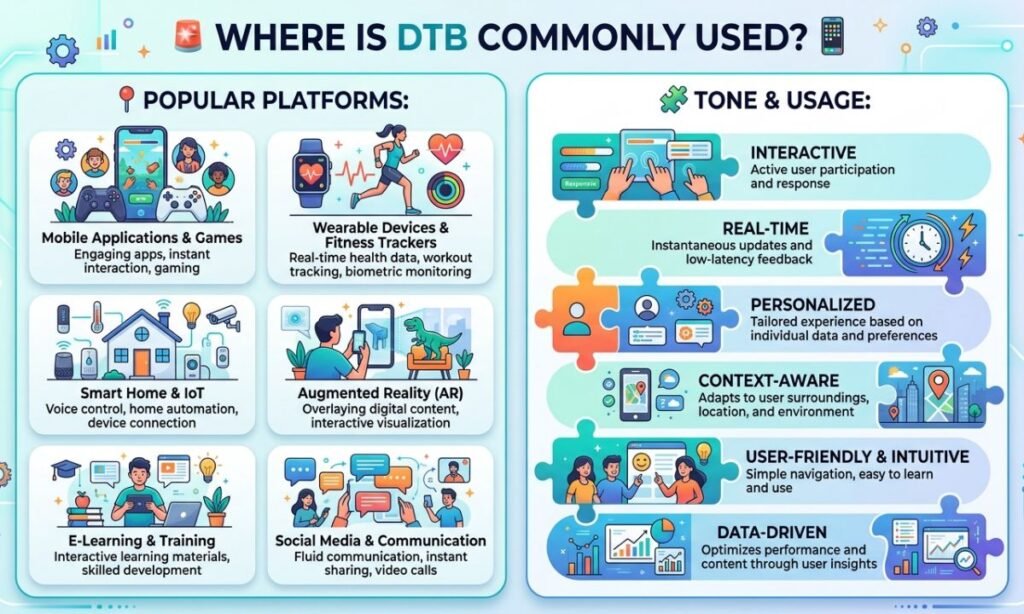
DTB shows up mostly in quick, informal digital chats. It fits best where messages are short and fast.
📍 Popular platforms:
- SMS and iMessage, where the phrase “text back” makes the most sense
- WhatsApp, for casual personal chats
- Instagram DMs, often between friends
- Snapchat, where chats are quick and temporary
- TikTok comments and DMs
- Twitter/X direct messages
🧩 Tone & usage:
DTB is informal. It belongs in chats with friends, partners, and family, not in work emails.
The tone depends on context:
- Casual: friendly, relaxed, low pressure
- Neutral: simply informational
- Sharp: can sound cold if paired with an annoyed message
Because it has no emotion built in, the words around it decide how it lands.
💬 Examples of DTB in Conversation
Seeing DTB in real situations makes it much easier to understand.
Ending a conversation
“Thanks for the update, talk later. DTB.”
The sender is wrapping up and doesn’t need a closing reply.
Sleeping message
“Going to sleep now, good night! DTB.”
This avoids the “good night” ping-pong that keeps both people awake.
Busy situation
“In a meeting until 5. DTB, I’ll call you after.”
Here DTB protects the sender’s focus. They’ll reach out when they’re free.
Emotional tone
“I just need some space right now. DTB.”
This one is serious. The sender wants quiet, and the best response is to respect it.
Friendly joke
“I’m eating pizza and ignoring the world. DTB 😂”
With an emoji, it’s clearly playful.
Social media caption
“Posted and gone. DTB.”
Some people use it as a caption to signal they’re logging off or not taking comments.
Also Read Meaning WSP Mean in Text
🕓 When to Use and When Not to Use DTB
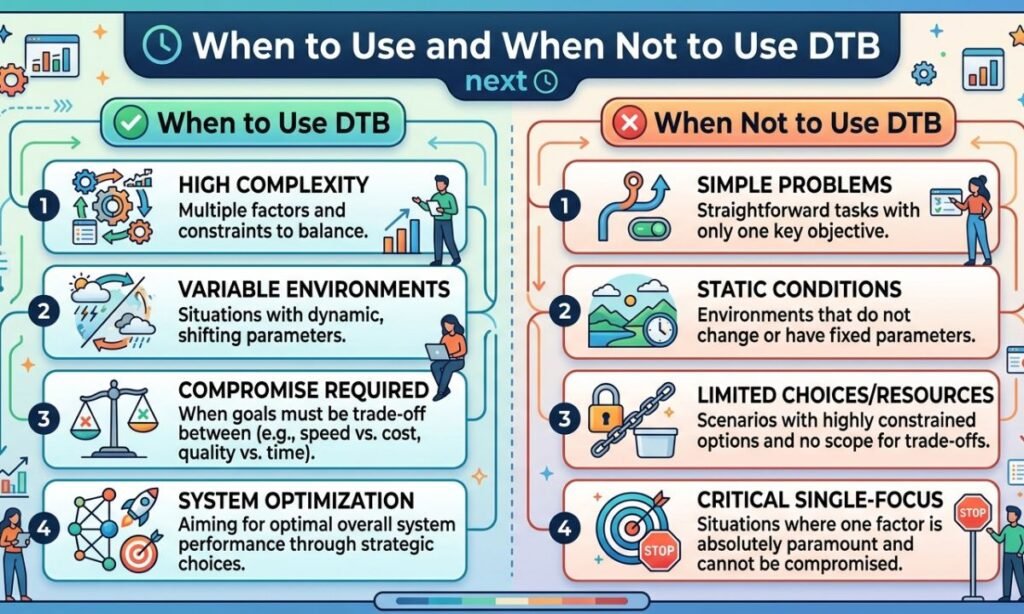
DTB is handy, but timing matters.
✅ When to Use DTB
- You’re busy, driving, or in a meeting
- You’re going to sleep
- You’ve shared info and need no answer
- You’re texting close friends who know the slang
- You want a short, clean end to a chat
❌ When Not to Use DTB
- In formal or professional messages such as emails to a boss or client
- With people who may not know the abbreviation
- During serious or emotional talks, where it could seem dismissive
- When you actually need a reply, since it sends the opposite signal
- When writing to someone older who may find the slang confusing
Quick rule: If the message matters, spell it out. “Please don’t reply, I’ll call you later” can’t be misread.
🔄 Other Meanings of DTB in Text
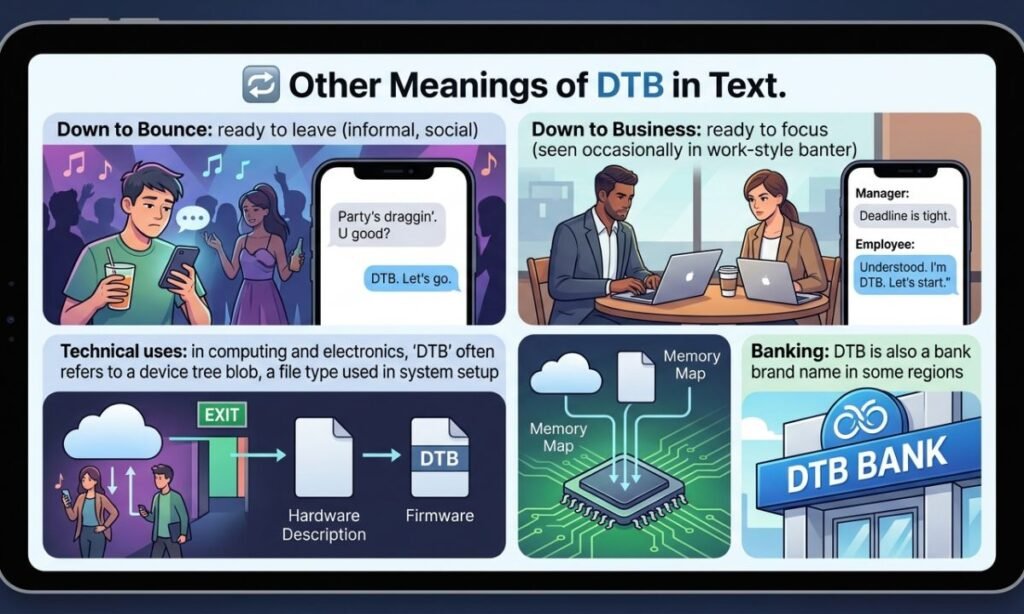
Depending on the setting, DTB can point to other things. These are rarely texting slang but worth knowing:
- Down to Bounce: ready to leave (informal, social)
- Down to Business: ready to focus (seen occasionally in work-style banter)
- Technical uses: in computing and electronics, “DTB” often refers to a device tree blob, a file type used in system setup
- Banking: DTB is also a bank brand name in some regions
If the topic is plans, it’s probably “Down to Bounce.” If the topic is code or hardware, it’s technical. If someone is signing off, it’s “Don’t Text Back.”
When you’re unsure, just ask: “What do you mean by DTB?” It’s quicker than guessing wrong.
🔄 Similar Slang Words or Alternatives
If DTB isn’t clear to your reader, these alternatives say the same thing:
| Slang | Meaning | Tone |
| NRN | No Reply Necessary | Polite |
| TTYL | Talk To You Later | Friendly |
| BRB | Be Right Back | Casual |
| G2G / GTG | Got To Go | Casual |
| IDK | I Don’t Know | Neutral |
| AFK | Away From Keyboard | Gaming/online |
| Ttyt | Talk To You Tomorrow | Friendly |
Best alternative for “Don’t Text Back”: NRN is the clearest and sounds the most polite.
🧠 Why People Use DTB in Texting
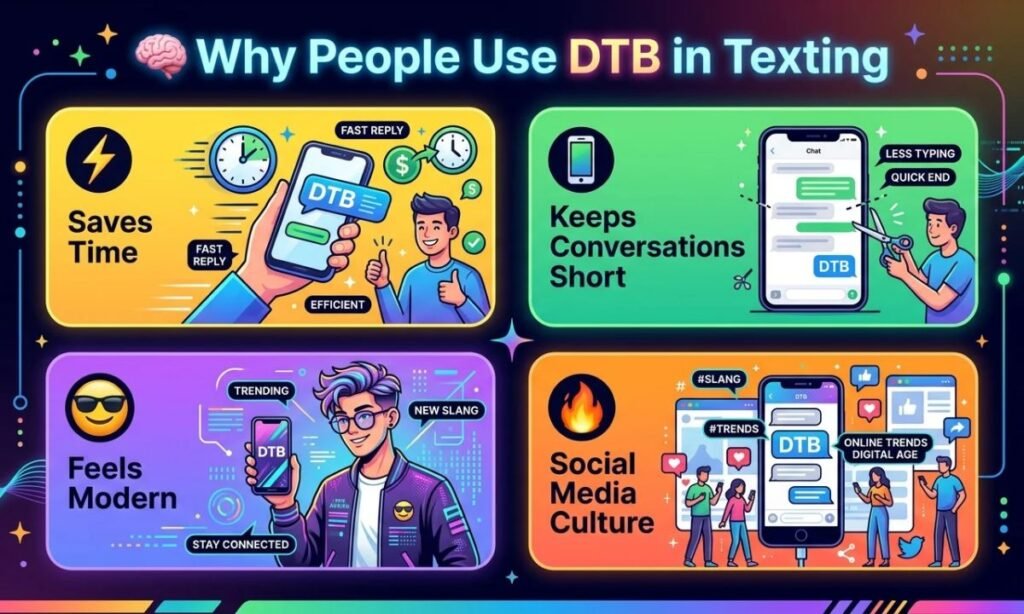
⚡ Saves Time
Three letters replace a full sentence. When you’re typing on a phone, that adds up.
📱 Keeps Conversations Short
It prevents endless “ok,” “thanks,” “no problem” loops that go nowhere.
😎 Feels Modern
Slang makes chats feel natural and relaxed. Younger users especially like short, expressive shorthand.
🔥 Social Media Culture
Platforms like TikTok, Instagram, and Snapchat reward quick, punchy language. Abbreviations spread fast there and then move into everyday texting.
Also Read Meaning SMFH Mean in Text
🧾 Is DTB Rude or Normal?
It depends on how and when it’s used.
😊 Normal Use:
Used to signal you’re busy or heading to bed. This is the most common case, and nobody should be offended.
😐 Neutral Use:
Used to close a message with no extra feeling. It’s just practical.
😠 Rude Use:
When paired with sharp or angry words, DTB can feel like a door slammed shut.
“You’re annoying. DTB.”
In that case, it’s dismissive on purpose. The abbreviation isn’t rude by itself. The message around it is.
Tip: Add a friendly touch, such as “talk soon!” or an emoji, to keep the tone warm.
Frequently Asked Questions About What Does DTB Mean in Text
What does DTB stand for in texting?
DTB most often stands for “Don’t Text Back,” meaning the sender doesn’t want a reply. It can also mean “Down to Bounce” in casual plans.
Is DTB rude?
Not by default. It’s normal when you’re busy or sleeping, but it can feel cold if used in an argument or with harsh words.
Does DTB have another meaning?
Yes. “Down to Bounce” (ready to leave) is the main alternative, and DTB also has technical and banking meanings outside texting.
Can I use DTB in formal messages?
No. Stick to full sentences in professional settings, since slang can look careless or confuse the reader.
When should I use DTB?
Use it with friends when you’re busy, going to sleep, or don’t need a reply. Skip it when the message is important or the person may not know it.
Is DTB popular on social media?
It’s fairly common in DMs and chats on WhatsApp, Instagram, Snapchat, and TikTok, though it’s less widespread than slang like TTYL or BRB.
🧾 Final Thoughts on DTB Mean in Text
DTB is a small abbreviation with a simple job. In most texts, it means “Don’t Text Back,” a quick way to say no reply is needed. In friendly plans, it can mean “Down to Bounce.”
Context is the key. Look at the platform, the topic, and the tone, and the meaning usually becomes obvious.
Use DTB with people who know the slang, keep it friendly, and switch to plain words whenever clarity matters. That way your message gets understood the first time, and your phone gets a little quieter too. 📵

1 thought on “What Does DTB Mean in Text Today Meaning 🤯📱 (2026)🕓”