
If you spend any time on Snapchat, Instagram, or TikTok, you have probably seen the letters SFS pop up in a caption, a story, or a comment. It looks small, but it carries a whole culture of trading followers and attention. This guide breaks down what SFS mean in text really is, where you will see it, how to respond, and whether it is even worth doing.
What Does SFS Mean in Text?
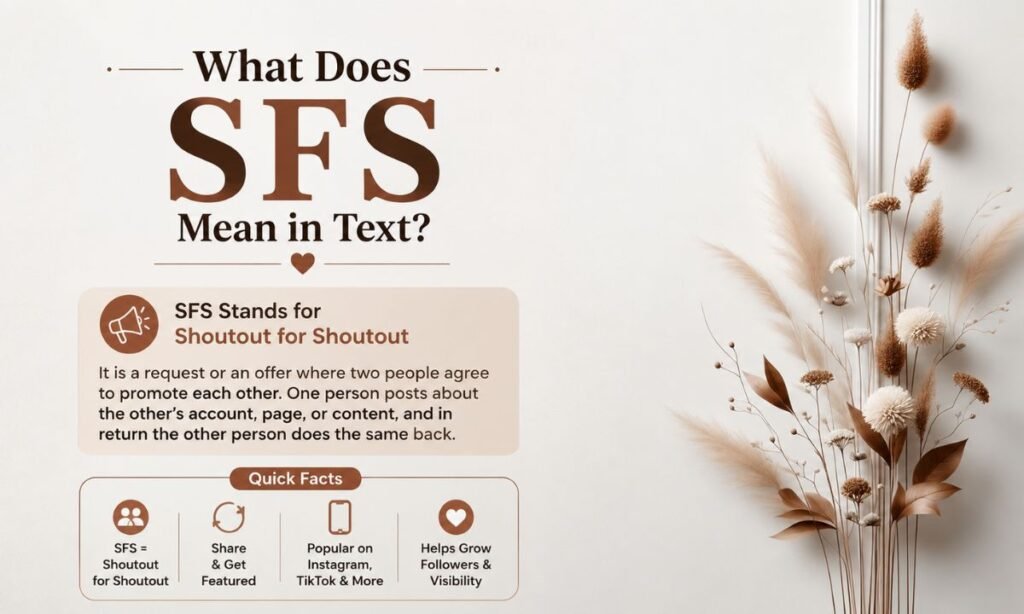
SFS stands for Shoutout for Shoutout. It is a request or an offer where two people agree to promote each other. One person posts about the other person’s account, page, or content, and in return the other person does the same thing back.
At its core, SFS mean in text is simple: I promote you, you promote me. It is a favor exchange built for growing an audience, and it works because both sides benefit at the same time.
Where Is SFS Commonly Used?
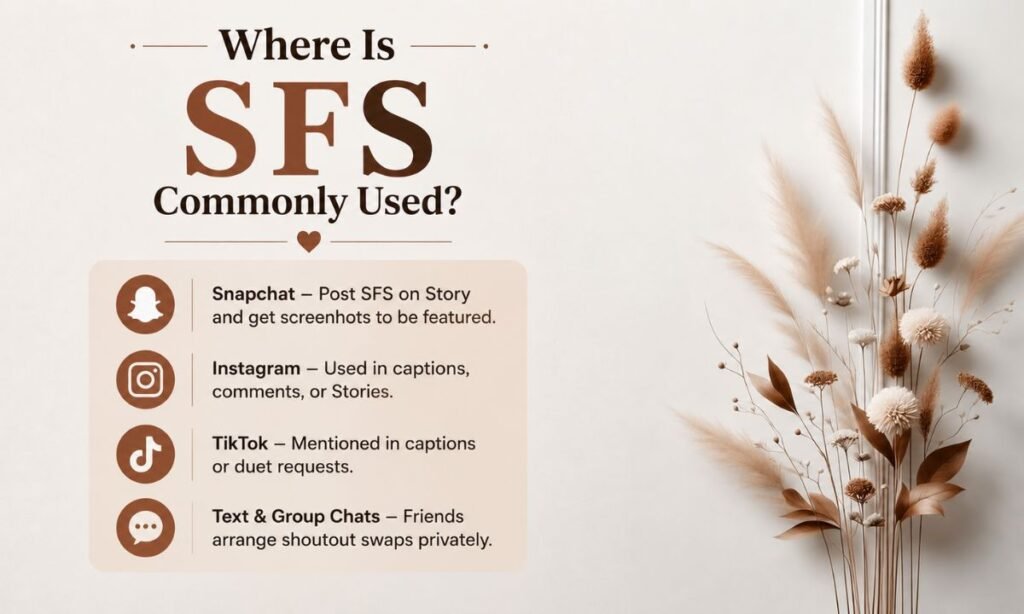
SFS shows up most on platforms built around visual content and quick sharing, such as:
- Snapchat, where users post SFS on their story asking followers to send a screenshot or a snap to be featured
- Instagram, where SFS often appears in captions, comments, or Stories
- TikTok, where creators mention SFS in captions or duet requests
- Text messages and group chats, when friends privately arrange a shoutout swap
Examples of SFS in Conversation
Here is how SFS typically shows up between two people chatting:
Person A: Hey, want to do an SFS today? I’ll post you on my story if you post me.
Person B: Sure, let’s do SFS!
Person A: Awesome, send me your best photo and I’ll tag you.
Person B: Sending it now, thanks for the shoutout!
How to Reply to SFS?
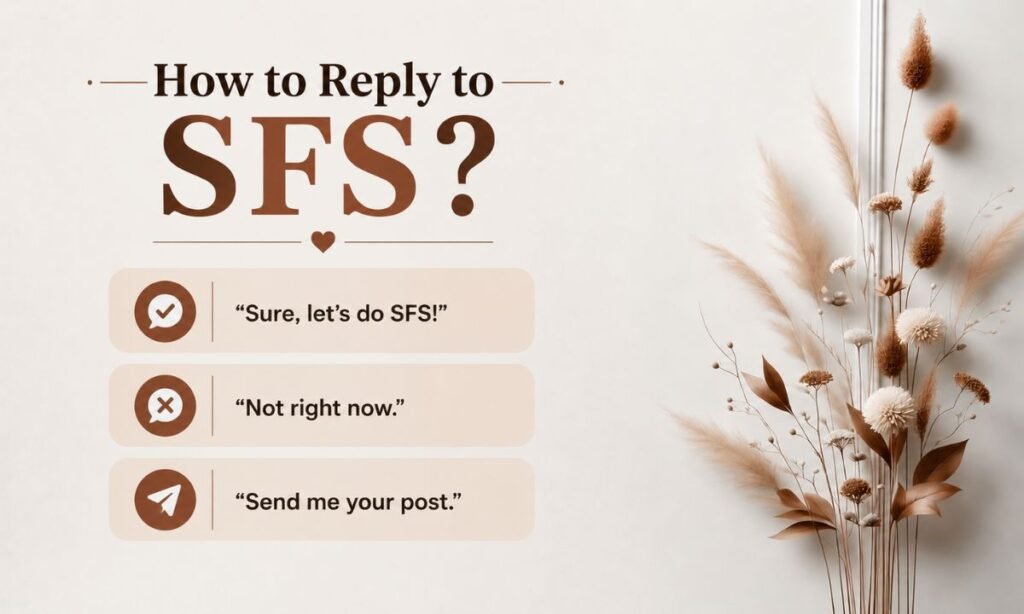
Replying to an SFS request does not have to be complicated. A few natural responses include:
- “Sure, let’s do SFS!”
- “Not right now.”
- “Send me your post.”
If you are interested, agree and ask what they want featured. If you are not interested, a short and polite decline is completely fine. You are never obligated to accept an SFS request just because someone asked.
Is SFS Safe?
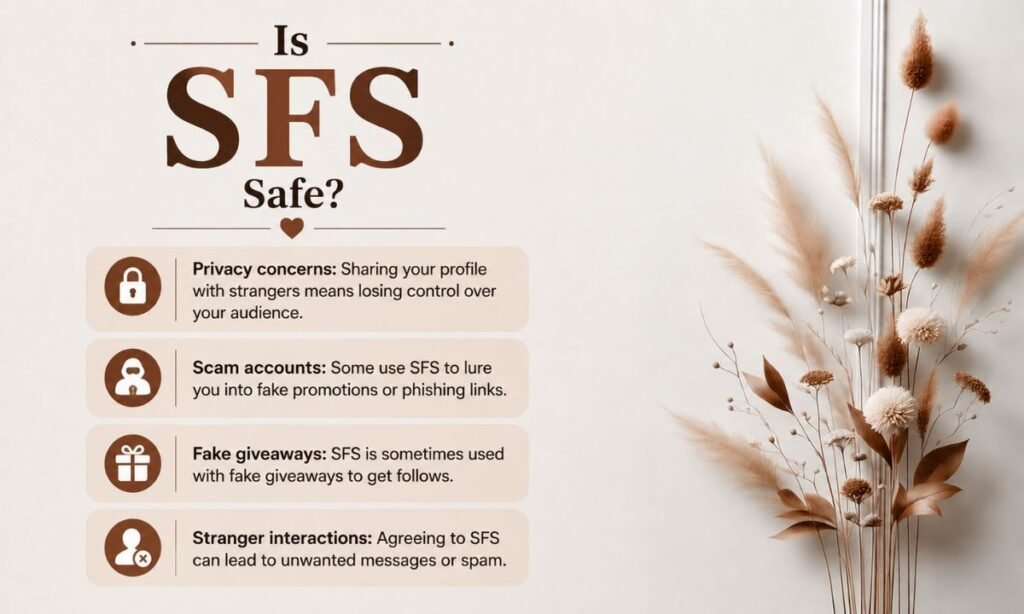
SFS is generally harmless between people who already know each other or follow similar communities, but there are a few risks worth knowing about.
- Privacy concerns: Doing an SFS with a stranger means sharing your profile with their entire audience, which you cannot control.
- Scam accounts: Some accounts use SFS requests to lure people into fake promotions or phishing links.
- Fake giveaways: SFS is sometimes paired with a giveaway that does not actually exist, just to get shares and follows.
- Stranger interactions: Agreeing to SFS with someone you do not know can open the door to unwanted messages or spam.
Common Mistakes When Using SFS
- Doing SFS with accounts that have no real connection to your audience
- Posting a shoutout without actually checking who the account belongs to
- Expecting big follower growth from a single SFS post
- Spamming SFS requests to random accounts instead of picking a good match
- Forgetting to follow through after the other person already posted their part
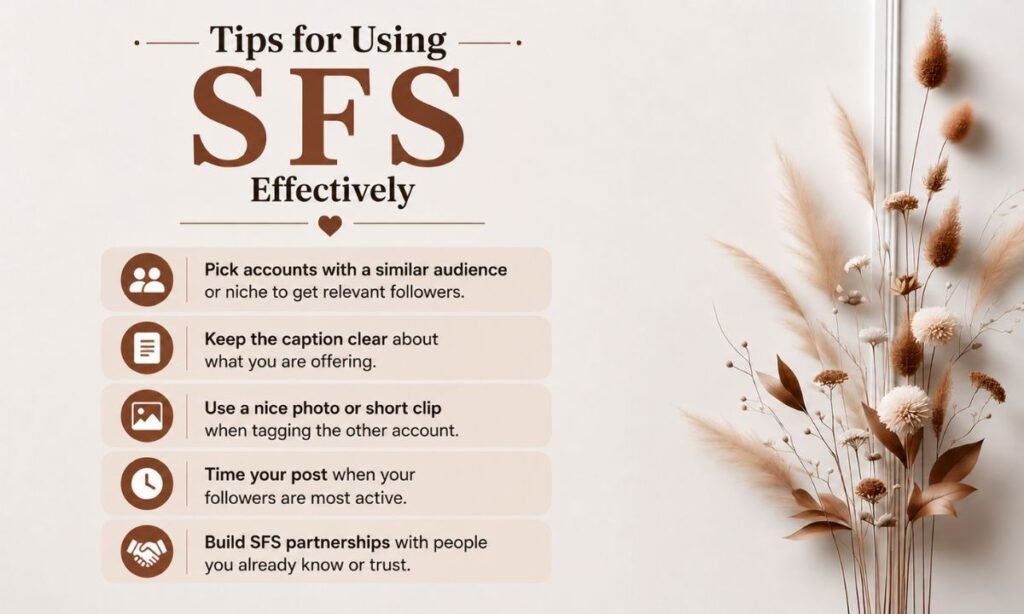
Tips for Using SFS Effectively
- Pick accounts with a similar audience or niche so the shoutout actually brings relevant followers
- Keep the caption clear about what you are offering
- Use a nice photo or short clip when tagging the other account
- Time your post when your followers are most active
- Build SFS partnerships with people you already know or trust when possible
Who Uses SFS the Most?
- Influencers, who trade shoutouts to reach each other’s audiences
- Small creators, who use SFS to grow their following faster in the early stages
- Businesses, who cross promote products or services with other small brands
- Brands, who partner for co marketing posts
- Artists, who showcase each other’s work to shared fan bases
Also Read Meaning DNI Mean in Text
SFS Meaning Compared with Other Internet Slang
SFS sits alongside a whole family of growth related slang terms. Here is how it compares:
- FFF (Follow for Follow for Follow): A three way follow trade, similar in spirit to SFS but focused only on following, not shoutouts.
- F4F (Follow for Follow): Two people agree to follow each other, no promotion involved.
- L4L (Like for Like): Two people agree to like each other’s posts.
- TBH (To Be Honest): Used to share an honest opinion about someone, often in a tagging game on social media.
- OOTD (Outfit of the Day): A caption used when someone shares their daily outfit photo.
- DM (Direct Message): A private message sent through a platform’s messaging feature.
- PM (Private Message): Similar to DM, more commonly used on forums and older platforms.
- HMU (Hit Me Up): An invitation for someone to message or contact you.
SFS is different from these because it focuses on mutual promotion, not just following or liking.
When to Use and When Not to Use SFS
When to Use SFS
- You want to grow your account within a niche community
- You have found a creator with a similar audience size and topic
- You trust the other account and know it is genuine
- You are okay with your profile being shared publicly
When Not to Use SFS
- The other account looks fake, inactive, or bot like
- You do not want your profile shared with unknown audiences
- The request feels tied to a suspicious giveaway or link
- You have no shared audience or niche with the other account
Similar Slang Words or Alternatives
If SFS is not quite what you are looking for, similar terms include Follow for Follow, Like for Like, Comment for Comment, and Collab, which is a broader term used when two creators team up on content rather than a simple shoutout swap.
Also Read Meaning OSNS Mean in Text
Frequently Asked Questions
What Does SFS Mean on Snapchat?
On Snapchat, SFS means Shoutout for Shoutout, usually posted on a story asking followers to snap the user so they can be featured back.
What Does SFS Mean on Instagram?
On Instagram, SFS carries the same meaning, Shoutout for Shoutout, and is often used in captions, Stories, or comments to arrange a mutual promotion.
What Does SFS Mean on TikTok?
On TikTok, SFS also stands for Shoutout for Shoutout, though it is less common than on Snapchat or Instagram since TikTok’s algorithm relies less on manual shoutouts.
What Does SFS Mean in Text Messages?
In a text message, SFS still means Shoutout for Shoutout, typically used when friends are privately arranging to promote each other’s accounts.
What Does SFS Mean on Social Media?
Across social media in general, SFS mean in text or in a caption is consistently Shoutout for Shoutout.
What Is the Full Form of SFS?
The full form of SFS is Shoutout for Shoutout.
Is SFS the Same as Shoutout for Shoutout?
Yes, SFS is simply the abbreviation for Shoutout for Shoutout.
Is SFS the Same as F4F (Follow for Follow)?
No, SFS is about promoting each other’s content, while F4F is only about following each other’s accounts.
How Do You Respond to an SFS Request?
You can accept with something like “Sure, let’s do SFS!”, decline politely with “Not right now,” or ask for more details with “Send me your post.”
Is SFS Safe to Use?
SFS is generally safe with people you trust, but caution is needed with strangers, scam accounts, and fake giveaways.
Should You Reply to SFS Requests from Strangers?
It depends on your comfort level. It is fine to decline any SFS request from someone you do not know or trust.
Can SFS Help You Gain Followers?
Yes, SFS can help you gain followers, especially when done with accounts that share a similar audience or niche.
Can SFS Help Small Creators Grow?
Yes, small creators often use SFS as a low cost way to reach new audiences without paid promotion.
Why Do Influencers Use SFS?
Influencers use SFS to tap into each other’s audiences quickly and build partnerships without spending money on ads.
How Do You Post an SFS on Instagram or Snapchat?
Simply tag the other account in your Story or post, mention that it is an SFS, and encourage your followers to check them out.
Final Thoughts
SFS mean in text boils down to one simple idea, Shoutout for Shoutout. It is a quick way for creators, influencers, and everyday users to help each other grow by trading exposure. Used wisely with trusted accounts in a similar niche, SFS can be a genuinely useful growth tool. Used carelessly with strangers or suspicious accounts, it can open the door to privacy risks and scams. Know the meaning, know the risks, and use SFS on your own terms.
