
If you’ve scrolled through Instagram bios, TikTok comments, or Discord profiles lately, chances are you’ve bumped into the letters “DNI” and wondered what they meant. This guide breaks down exactly what DNI means in text, where it’s used, and how to use it correctly without sounding harsh or confusing.
🧠 What Does DNI Mean in Text?
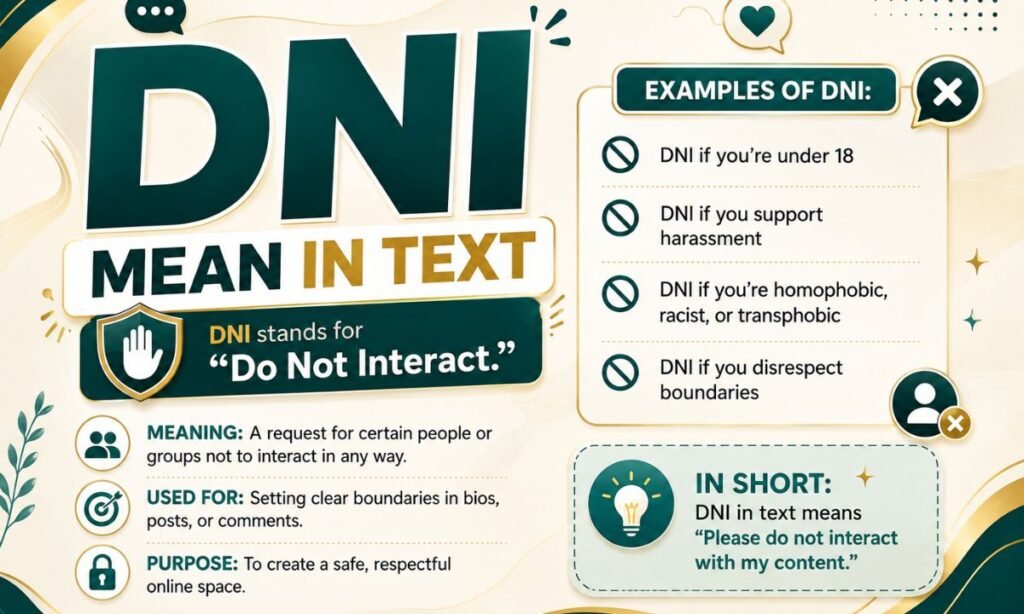
DNI stands for “Do Not Interact.” When someone uses DNI in text, they’re telling specific people or groups not to comment, message, follow, or engage with their content in any way. It’s a boundary-setting phrase that has become extremely common in online spaces, especially among younger users on social media.
So when you ask what DNI means in text, the short answer is simple: it’s a polite (or sometimes firm) way of saying “please stay away from my posts and profile.” People often pair DNI with a list of traits or behaviors for example, “DNI if you’re under 18” or “DNI if you support harassment.” This turns a vague request into a clear boundary that followers can actually understand and respect.
Understanding DNI in text matters because it shows up everywhere from bios to comment sections, and misunderstanding it can lead to awkward interactions or unintentionally crossing someone’s stated boundary.
📱 Where Is DNI Commonly Used?
DNI didn’t start on one single app; it spread across multiple platforms as online communities grew more focused on self-protection and curated spaces.
📍 Popular platforms:
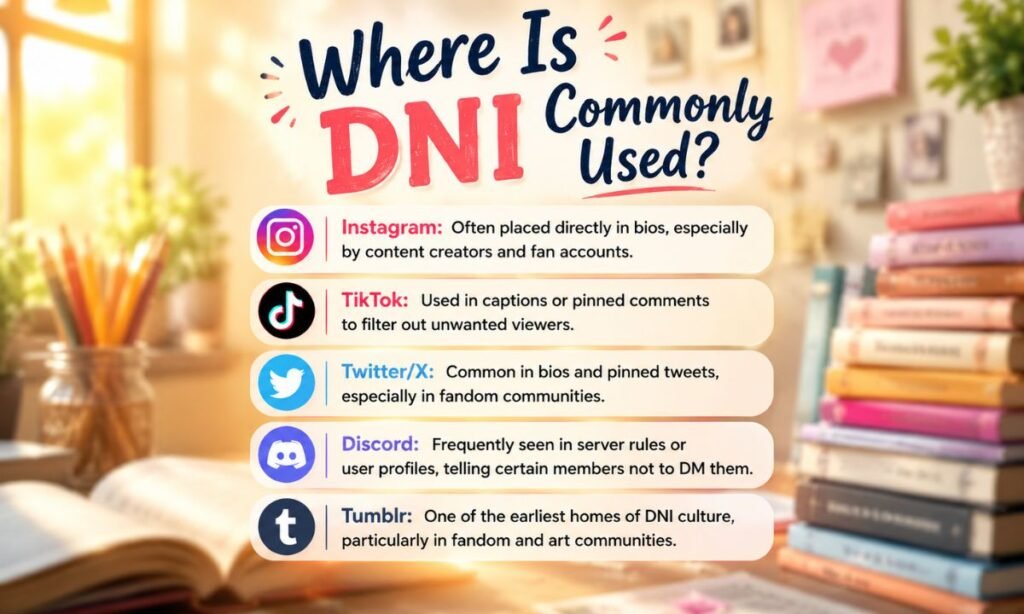
- Instagram: Often placed directly in bios, especially by content creators and fan accounts.
- TikTok: Used in captions or pinned comments to filter out unwanted viewers.
- Twitter/X: Common in bios and pinned tweets, especially in fandom communities.
- Discord: Frequently seen in server rules or user profiles, telling certain members not to DM them.
- Tumblr: One of the earliest homes of DNI culture, particularly in fandom and art communities.
🧩 Tone & Style:
The tone of DNI can range from friendly to blunt. Some people soften it with emojis or explanations, while others keep it short and direct. Either way, the core purpose stays the same, setting a clear line that shouldn’t be crossed.
💬 Examples of DNI in Conversation
Here are a few real-world style examples showing how DNI in text actually looks:
- “DNI if you’re a minor, this account isn’t for you.”
- “Basic DNI list: racists, bigots, anyone under 16.”
- “Please DNI if you don’t respect creators’ boundaries.”
- “New followers? DNI if you’re just here to argue.”
- “This is a safe space, so DNI if you can’t be kind.”
Notice how DNI is almost always followed by a condition. That’s what makes it useful — it’s not just a vague warning, it’s a specific filter.
🕓 When to Use and When Not to Use DNI
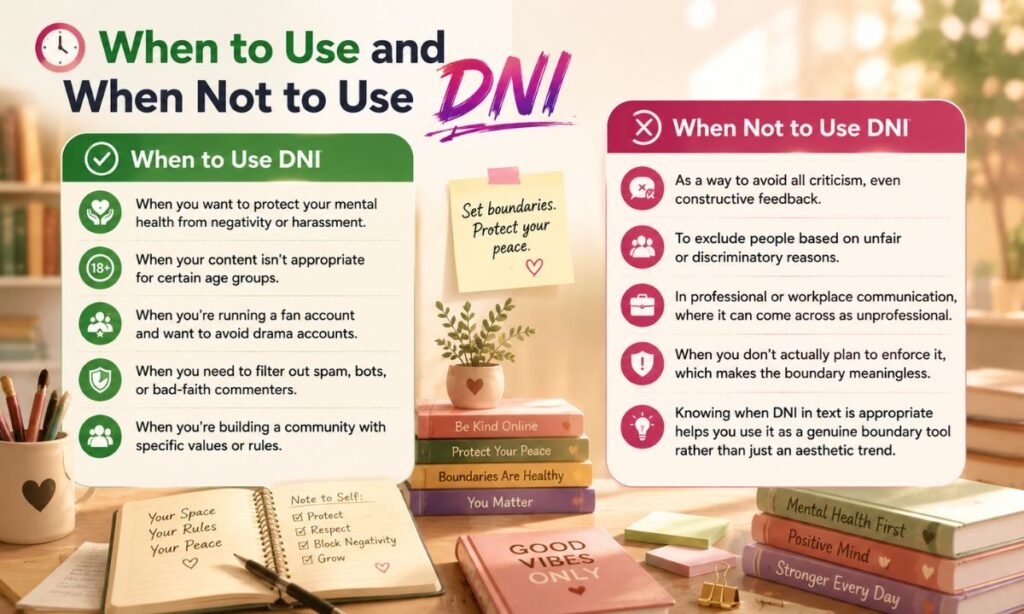
✅ When to Use DNI
- When you want to protect your mental health from negativity or harassment.
- When your content isn’t appropriate for certain age groups.
- When you’re running a fan account and want to avoid drama accounts.
- When you need to filter out spam, bots, or bad-faith commenters.
- When you’re building a community with specific values or rules.
❌ When Not to Use DNI
- As a way to avoid all criticism, even constructive feedback.
- To exclude people based on unfair or discriminatory reasons.
- In professional or workplace communication, where it can come across as unprofessional.
- When you don’t actually plan to enforce it, which makes the boundary meaningless.
Knowing when DNI in text is appropriate helps you use it as a genuine boundary tool rather than just an aesthetic trend.
🔄 Other Meanings of DNI in Text
While “Do Not Interact” is the most common meaning, DNI can occasionally stand for other things depending on context:
- Director of National Intelligence: used in political or news contexts, unrelated to social media slang.
- Direct Numerical Identifier: occasionally used in technical or database contexts.
- Documento Nacional de Identidad: a national ID document used in Spanish-speaking countries.
However, in casual texting and social media, DNI almost always means “Do Not Interact.” Context clues like emojis, bios, or fandom hashtags usually make the meaning obvious.
🔄 Similar Slang Words or Alternatives
If you’re learning what DNI means in text, it helps to know related terms people often use alongside it:
- BYI: “Before You Interact,” a softer lead-in to boundary lists.
- Soft block: quietly removing a follower without confrontation.
- Curated space: a phrase describing an intentionally filtered online environment.
- Safe space: often used together with DNI to describe the goal behind the boundary.
These terms usually appear together in bios, forming a small “boundary toolkit” that online users rely on.
🧾 Why People Use DNI in Texting & Social Media
Understanding why DNI became so popular helps explain its lasting presence across platforms.
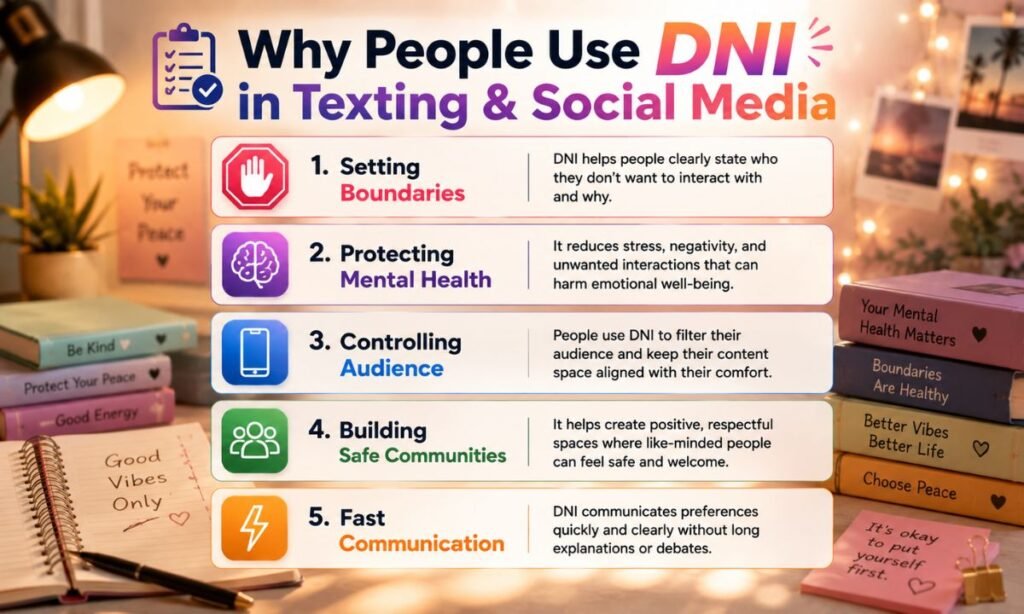
🛑 1. Setting Boundaries
At its core, DNI is about boundaries. People want control over who engages with their content, and DNI gives them a simple phrase to communicate that.
🧠 2. Protecting Mental Health
Constant exposure to negativity, arguments, or harassment can be exhausting. DNI helps filter out interactions that could be draining or harmful.
📱 3. Controlling Audience
Creators, especially those with niche content, use DNI to keep their audience aligned with the type of engagement they want.
🧑🤝🧑 4. Building Safe Communities
In fandoms and interest-based groups, DNI helps maintain a community that feels comfortable and welcoming for its intended members.
⚡ 5. Fast Communication
Instead of writing a paragraph explaining boundaries, DNI lets people communicate quickly and efficiently, especially in bios with limited character space.
🧠 Is DNI Rude or Respectful?
Whether DNI feels rude or respectful really depends on tone, phrasing, and context.
😊 Respectful:
“DNI if you’re under 18 this content isn’t meant for younger audiences.”
😐 Neutral:
“DNI: spam accounts, bots.”
😠 Harsh:
“DNI or I’ll block you immediately, no exceptions.”
Generally, DNI is seen as a normal and accepted part of online etiquette rather than something inherently rude. It becomes harsh only when paired with aggressive language or unfair conditions.
🧾 DNI Meaning Discord Explained
On Discord specifically, DNI usually appears in two places: server rules and individual user profiles (“About Me” sections). In servers, DNI might be used to state who shouldn’t join, such as “DNI if you’re not part of this fandom.” On personal profiles, it often warns against unwanted DMs, like “DNI if we’ve never spoken before.” Since Discord is heavily community-based, DNI meaning discord context is almost always tied to protecting personal space or maintaining server-specific rules.
🧠 DNI vs BYI: What’s the Difference?
Both DNI and BYI serve similar purposes but function slightly differently:
- DNI (Do Not Interact): A direct boundary telling certain people to avoid all interaction.
- BYI (Before You Interact): A softer introduction, often listing information or preferences before someone decides to engage.
Think of BYI as a heads-up and DNI as a firm boundary. Many bios use both together, starting with BYI details and ending with a DNI list for clarity.
Also Read Meaning MYF Mean in Text
🧑💻 How to Write Your Own DNI List
If you’re thinking about adding a DNI section to your own bio or profile, it helps to keep a few things in mind so your list is clear, fair, and actually effective.
- Be specific. Instead of a vague “DNI if you’re weird,” try “DNI if you post NSFW content” or “DNI if you’re under 16.” Specific conditions are easier for people to understand and respect.
- Keep it short. A long, complicated DNI list can be confusing. Stick to the few boundaries that matter most to you.
- Match the tone to your audience. A gaming server might use a more casual tone, while a professional-adjacent account might phrase things more formally.
- Be consistent. If you say DNI applies to a certain group, actually enforce it. Otherwise, the boundary loses meaning over time.
- Update it when needed. As your content or community changes, revisit your DNI list to make sure it still reflects your current boundaries.
Following these steps makes your DNI in text feel like a genuine, respected boundary rather than just a trendy phrase copied from someone else’s bio.
🌐 How DNI Culture Has Evolved Over Time
DNI didn’t appear overnight; it grew out of earlier internet boundary-setting phrases used in fandom spaces during the early 2010s. Back then, users on blogging platforms would write long paragraphs explaining who shouldn’t follow them. Over time, this got shortened into acronyms like DNI, making boundaries faster to read and easier to search for using hashtags.
As platforms like TikTok and Discord grew, DNI adapted to fit shorter formats bios, pinned comments, and profile “About Me” sections. Today, DNI is recognized across generations of internet users, even by people who aren’t part of the original fandom communities where it started. This evolution shows how internet slang often becomes mainstream once it proves genuinely useful for everyday communication.
Also Read Meaning VM Mean in Text
FAQs About What Does DNI Mean in Text
What does DNI stand for?
DNI stands for “Do Not Interact,” a phrase used to tell specific people not to engage with someone’s content or profile.
What does DNI mean in text?
In texting and social media, DNI means someone wants certain people to avoid commenting, messaging, or following them, usually based on stated conditions.
What is DNI meaning discord?
On Discord, DNI usually refers to boundaries set in server rules or personal profiles, telling certain users not to interact or send direct messages.
Is DNI rude?
Not inherently. DNI is generally viewed as a normal boundary-setting tool, though tone and wording can make it feel more respectful or more harsh.
Where is DNI most used?
DNI is most common on Instagram, TikTok, Twitter/X, Discord, and Tumblr, especially within fandom and creator communities.
Why do people use DNI?
People use DNI to protect their mental health, set clear boundaries, control who interacts with their content, and build safer, more comfortable online communities.
🧾 Final Thoughts
At its heart, DNI is simply a modern shorthand for boundary-setting online. Knowing what DNI means in text helps you navigate bios, comments, and community rules with more confidence whether you’re using the phrase yourself or just trying to understand it when you see it. As online spaces continue to prioritize safety and curated interactions, DNI is likely to remain a staple of internet language well into 2026 and beyond.
